
Markdown Inventory Optimizer
Optimize pricing and discount timing with AI to maximize revenue while efficiently clearing inventory
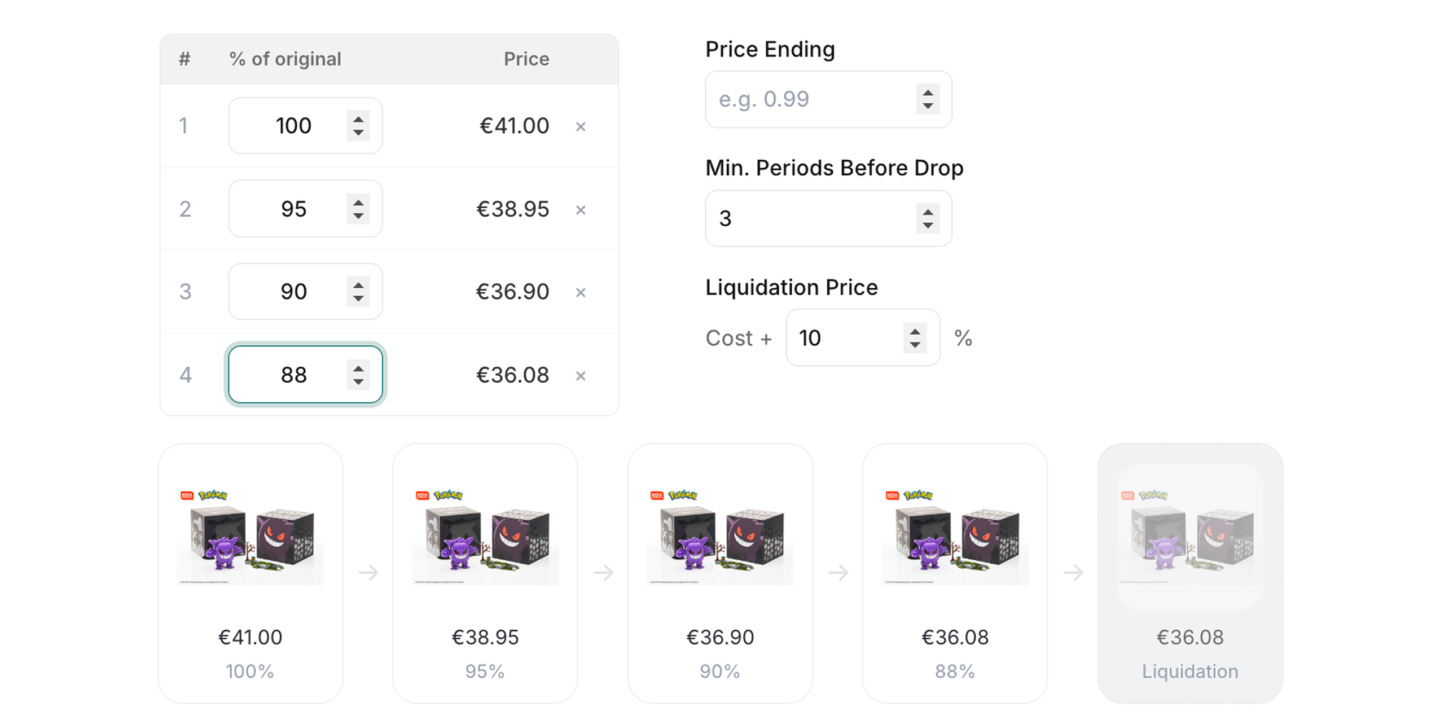
How Markdown Inventory Optimizer Maximizes Revenue While Clearing Stock
Managing inventory isn’t just about selling—it’s about selling at the right price, at the right time. Discount too early and you lose margin. Too late and stock sits idle. The Markdown Inventory Optimizer uses AI to continuously learn from demand and inventory signals, optimizing both pricing and markdown timing to maximize revenue and efficiency.
-
Optimize Markdown Timing
Apply discounts at the right moment to accelerate sales without sacrificing unnecessary margin
-
Maximize Revenue from Inventory
Use demand signals to guide gradual price reductions and capture value before discounting further
-
Improve Inventory Turnover
Continuously adjust prices based on stock levels to move inventory faster and more efficiently
-
Reduce Total Cost of Stock
Incorporate holding, marketing, and acquisition costs into pricing decisions for true profitability
DynamicPricing AI gave us the ability to react to market changes in real time. We saw a measurable revenue uplift within the first month of going live.
MOST RELEVANT KPIs
Understand your business looking at some numbers
-
+20% Inventory Turnover
Stock Efficiency
Sell products faster with optimized pricing and markdown timing
-
+12% Revenue Recovery
Markdown Performance
Capture more revenue from discounted products through smarter price paths
-
-25% Holding Costs
Cost Reduction
Reduce storage and inventory costs by clearing stock more efficiently
-
+10% Margin Preservation
Profit Protection
Avoid unnecessary early discounts with AI-optimized markdown strategies
FAQ - Markdown Inventory Optimizer
-
Markdown Inventory Optimizer it’s an AI-powered pricing model that continuously learns from inventory levels and demand signals to optimize pricing and discount timing, helping you maximize revenue while clearing stock efficiently.
-
Traditional markdowns are fixed and scheduled in advance. The optimizer adapts in real time, adjusting prices dynamically based on demand, stock levels, and performance.
-
The model analyzes demand signals, sales performance, and inventory levels to determine the optimal moment to reduce prices—avoiding discounts that are too early or too late.
-
Yes. You can define boundaries such as minimum prices, margin thresholds, and discount limits to ensure all pricing decisions stay aligned with your business strategy.
-
Yes. The model can incorporate holding costs, marketing spend, and acquisition costs to ensure pricing decisions reflect true profitability.
-
By continuously adjusting prices based on stock availability and demand, the model accelerates sales and helps move inventory more efficiently.
-
It works best for products with variable demand or lifecycle dynamics, such as seasonal items, fashion, or categories where inventory risk and markdown strategies are key.
Schedule A call with our team!
Talk to an ExpertGet in touch with a Dynamic Pricing AI representative
Please fill out the form and we will contact you back with more details.