
Conversion Rate Pricing Rules
Turn traffic into revenue by adjusting prices based on real conversion performance
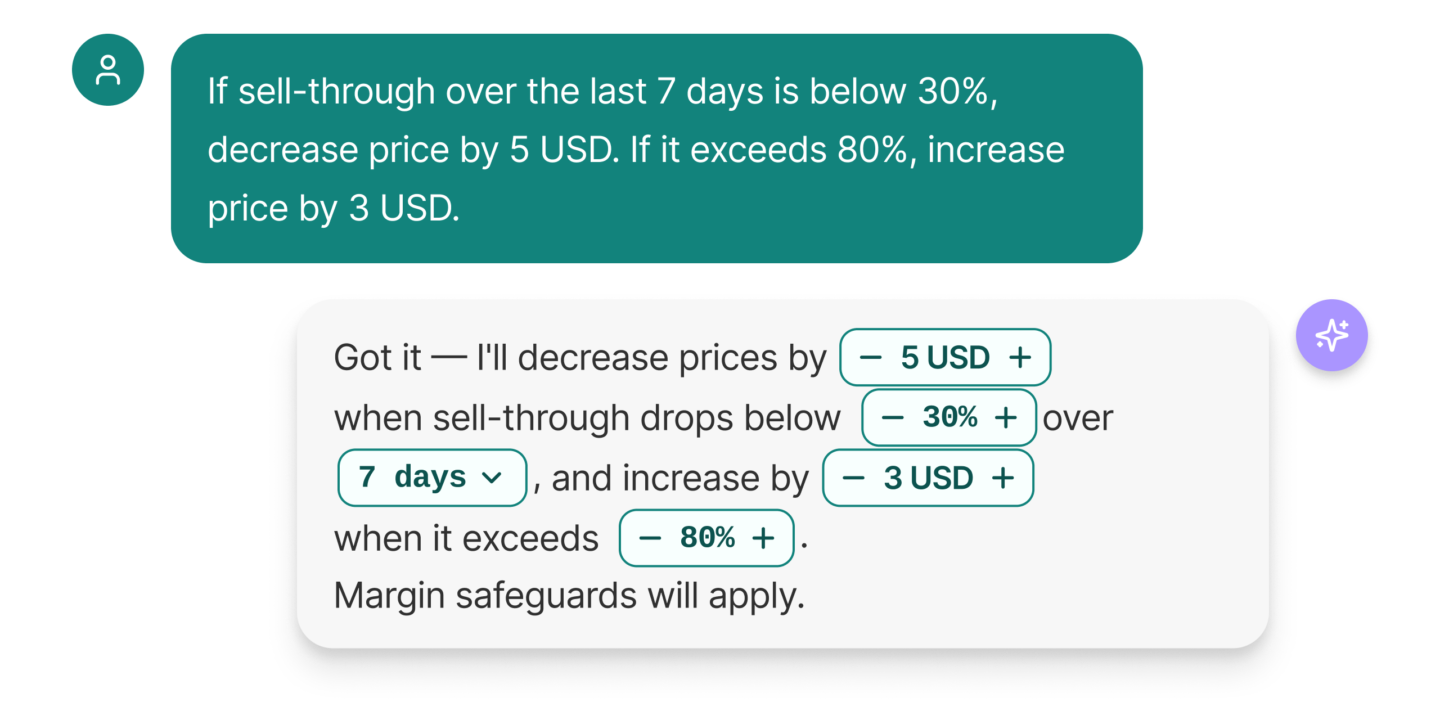
How Conversion Rate Pricing Rules Drive More Sales Efficiency
Conversion isn’t just about traffic - it’s about how pricing influences buying decisions. Some products get views but don’t convert, while others have room to increase margins. Conversion-based rules help you adjust prices based on real performance and optimize every interaction
-
Turn Traffic into Revenue
Adjust prices for high-traffic, low-conversion products to unlock missed sales opportunities
-
Optimize Winning Products
Identify strong performers and increase prices where demand allows for higher margins
-
Data-Driven Pricing Decisions
Base pricing on real conversion signals, not assumptions—every change is backed by performance
-
Continuous Performance Optimization
React to conversion trends and post-price-change impact to keep improving over time
DynamicPricing AI gave us the ability to react to market changes in real time. We saw a measurable revenue uplift within the first month of going live.
MOST RELEVANT KPIs
Understand your business looking at some numbers
-
+14% Conversion Rate Uplift
Conversion Performance
Increase the percentage of visitors who complete a purchase
-
+11% Revenue per Visitor
Revenue Efficiency
Generate more revenue from the same traffic by optimizing pricing
-
+7% Margin Expansion
Profit Optimization
Capture additional margin on high-performing products
-
-20% Missed Sales Opportunities
Demand Capture
Reduce lost conversions on products with high interest but low sales
FAQ - Conversion Rate Pricing Rules
-
Conversion-based pricing rules automatically adjust product prices based on how well products convert. If conversion rate drops below a defined threshold, prices can decrease to encourage purchases. If conversion remains strong, prices can increase to protect or improve margins.
-
The system analyzes real store performance data over selected time windows (e.g., last 7 or 14 days). Conversion performance is continuously analyzed, and pricing actions are triggered based on predefined rule logic and real store data.
-
Yes. You decide what “low” or “high” conversion means for your business, as well as the performance window (for example, last 7 days, 14 days, or custom periods). This ensures the rule reflects your store’s traffic volume and seasonality.
-
The system continues monitoring performance after every adjustment. As conversion stabilizes or strengthens, pricing can be refined again to reflect the new demand level — within your defined limits.
-
Every conversion-based rule operates within price floors, margin limits, and maximum adjustment percentages that you define. This ensures prices never drop below sustainable levels or increase beyond acceptable brand limits.
-
No. Conversion-based pricing rules operate at the product or segment level based on performance data. This prevents unnecessary across-the-board discounting and focuses only on products that need optimization.
Schedule A call with our team!
Talk to an ExpertGet in touch with a Dynamic Pricing AI representative
Please fill out the form and we will contact you back with more details.