
Demand‑Based Pricing Rules
Rules to maximize revenue and adapt instantly to market demand
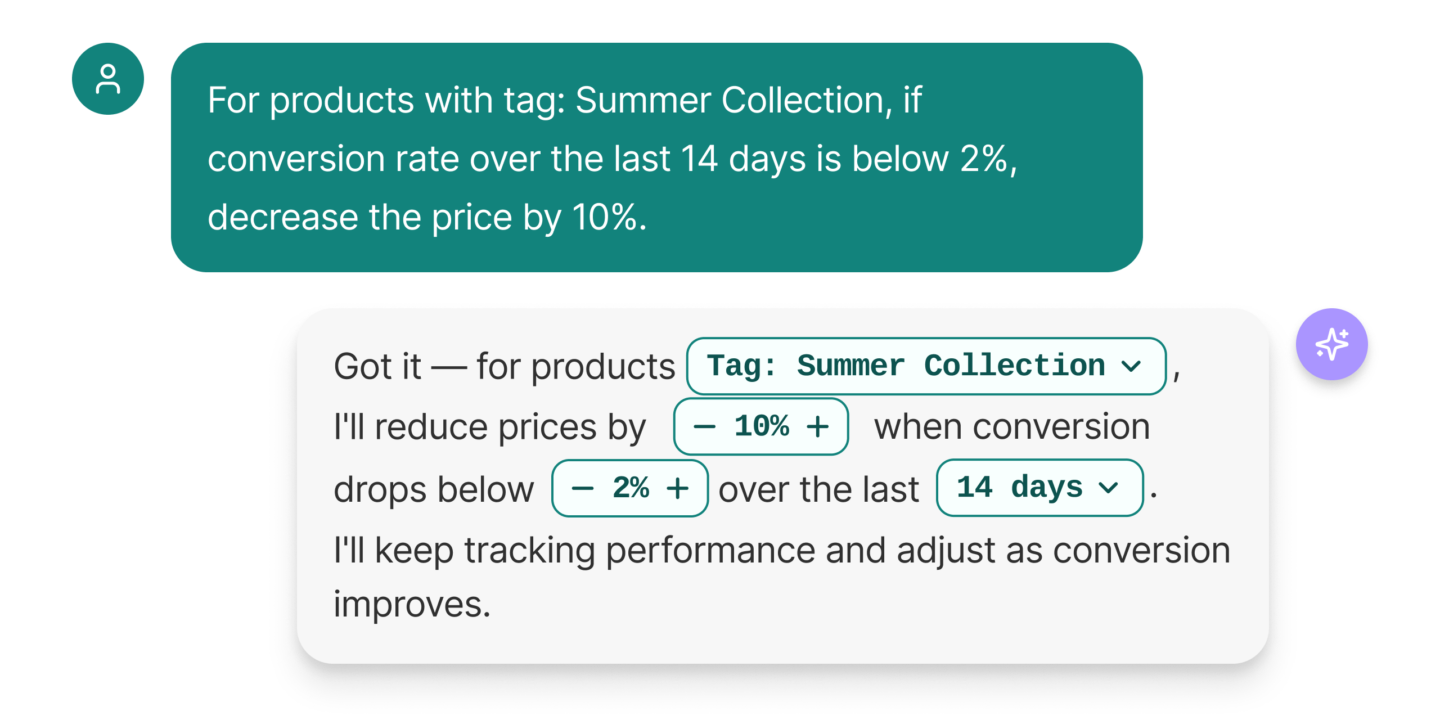
How Demand-Based Pricing Rules Drive Better Profitability
Demand isn’t static — it rises and falls with seasons, trends, search interest, web traffic, product page views, and countless market signals. Static rules simply can’t keep up with real market behavior.
-
Full Control Over Pricing
You define exactly how prices change. Set clear rules, thresholds, and limits—no surprises.
-
Easy to Understand & Manage
Simple IF–THEN logic makes it transparent. Your team always knows why a price changed.
-
Fast to Implement
No complex setup or training required. You can start adjusting prices quickly.
-
Business Logic Alignment
Rules can reflect your strategy (e.g., margin protection, stock clearance, peak demand).
"We've been working with DynamicPricing.ai for some time now, and it's been a great experience. The platform is reliable, flexible enough to match our market needs, and above all, the support team truly stands out — always responsive, knowledgeable, and proactive. They've become a key partner in our pricing strategy.
MOST RELEVANT KPIs
Understand your business looking at some numbers
-
+12% Revenue Uplift
Revenue Growth
Increase total sales by adjusting prices when demand is high.
-
+18% Sell-Through Rate
Inventory Efficiency
Move more products by lowering prices when demand drops
-
+10% Margin Improvement
Profit Margin
Protect and grow margins by raising prices during peak demand
-
-25% Manual Pricing Time
Operational Efficiency
Reduce time spent on manual price updates with automated rules
FAQ - Demand-based Pricing Rules
-
Demand-based pricing rules automatically adjust prices based on real customer demand. Instead of using fixed thresholds, these rules respond to signals like sales velocity, traffic, page views, and seasonality to keep prices aligned with how the market behaves in real time.
-
Static pricing rules rely on predefined conditions that rarely change. Demand-based pricing rules adapt continuously as demand rises or falls.
This allows prices to increase during demand spikes and decrease during slower periods, without requiring constant manual intervention. -
Demand-based pricing rules can monitor signals such as:
Sales velocity and conversion rate
Price elasticity
Page views and traffic changes
Seasonal patterns and event-driven demand
These signals allow pricing decisions to stay aligned with real market behavior. -
When demand increases, prices can rise automatically to capture more value per order.
When demand weakens, prices can adjust downward to protect sell-through and reduce excess inventory.
This balance helps merchants capture revenue during peaks while maintaining efficiency during slower periods. -
Price changes always operate within boundaries you define.
You control minimum and maximum prices, margin guards, and when rules are active.
The system reacts to demand, but it never operates without guardrails or outside your defined limits. -
Demand-based pricing rules address common challenges such as:
Missing revenue during demand spikes
Overstock and slow turnover during low-interest periods
Difficulty reacting quickly to market changes
Reliance on manual price updates or discounts
By responding to demand automatically, pricing stays aligned with market conditions. -
Yes. Demand-based pricing rules are designed to work across platforms.
Whether prices are applied through a Shopify store or managed in a web-based environment, the same demand signals, guardrails, and logic apply consistently.
Schedule A call with our team!
Talk to an ExpertGet in touch with a Dynamic Pricing AI representative
Please fill out the form and we will contact you back with more details.