
Inventory Pricing Rules
Automate intelligent price adjustments to clear excess stock, protect margins, and sell smarter every day.
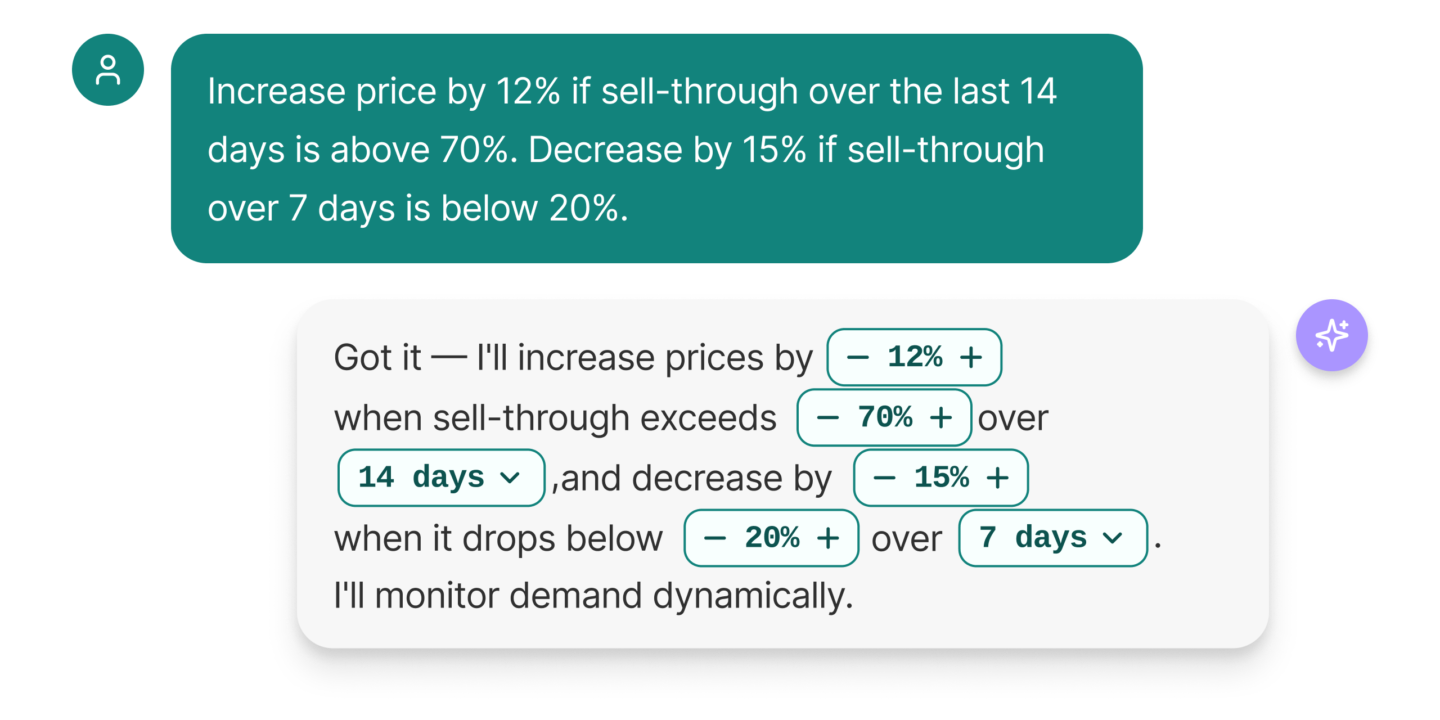
How Inventory Pricing Rules Drive Smarter Stock Management
Inventory is constantly changing — stock levels rise and fall with sales velocity, seasonality, replenishment cycles, and product lifecycle. Static pricing can lead to overstock, missed sales, or unnecessary discounts. Inventory-based rules help you react in real time and stay in control.
-
Full Control Over Inventory-Based Pricing
Define exactly how prices react to stock levels. Set thresholds, conditions, and limits to match your inventory strategy.
-
Easy to Understand & Manage
Simple IF–THEN logic makes pricing decisions clear. Your team always knows how stock levels influence prices.
-
Fast to Implement
No complex setup required. Activate rules quickly and start optimizing inventory performance immediately.
-
Business Logic Alignment
Align pricing with your goals—clear excess stock, protect high-value items, or accelerate sell-through when needed.
"DynamicPricing AI gave us the ability to react to market changes in real time. We saw a measurable revenue uplift within the first month of going live".
MOST RELEVANT KPIs
Understand your business looking at some numbers
-
+22% Stock Clearance Rate
Inventory Turnover
Clear excess stock faster with automated price adjustments
-
-30% Dead Stock
Unsold Inventory Reduction
Reduce slow-moving inventory by reacting to stock levels in real time
-
+8% Margin Protection
Profit Preservation
Avoid unnecessary discounts with rules that protect margins
-
+8% Margin Protection
Profit Preservation
Avoid unnecessary discounts with rules that protect margins
FAQ - Inventory Pricing Rules
-
Inventory Pricing Rules are automated, condition-based pricing adjustments that react to inventory data — like stock levels and age — so your prices always support your business goals.
-
They eliminate manual repricing, accelerate inventory sell-through, and protect your margins with smart, automated pricing.
-
No. Rules are created with simple statements and natural language prompts — no coding required.
-
When products accumulate or stop selling, inventory pricing rules can gradually reduce prices to stimulate demand. This helps clear excess stock at the right moment—without discounting too early or sacrificing margins unnecessarily.
-
Yes. Inventory pricing rules can increase prices for fast-selling or scarce products. This helps protect against stock-outs, improve margins, and extend the selling window when demand is strong.
-
Inventory pricing rules can respond to signals such as current stock levels, days of inventory remaining, sell-through rate, and stock age. These signals allow pricing to adapt to the real state of your inventory over time.
-
All inventory-based price changes operate within guardrails you define, such as minimum prices, maximum prices, or margin thresholds. This ensures that automated pricing decisions never compromise your profitability.
-
Yes. Inventory pricing rules can be scoped to specific products, categories, tags, or collections. This allows you to apply different strategies to fast movers, seasonal items, stable sellers or clearance stock.
-
No. Inventory pricing rules support inventory management by automating price adjustments, but they do not replace forecasting, replenishment, or purchasing decisions. They help pricing stay aligned with inventory conditions as they evolve.
Schedule A call with our team!
Talk to an ExpertGet in touch with a Dynamic Pricing AI representative
Please fill out the form and we will contact you back with more details.