
Unlock E-commerce Growth with Custom Pricing Rules and Policies
In today’s competitive e-commerce landscape, static pricing is a relic. Businesses need agile strategies. Custom pricing rules and policies are essential. They allow dynamic adjustments. This approach maximizes profitability. It also enhances customer satisfaction. Let’s explore this powerful strategy. We will see how it transforms your online store.
Why Embrace Custom Pricing? The Key Benefits for Your Store
Implementing custom pricing offers numerous advantages. These benefits drive significant business growth. They optimize your revenue streams effectively.
- Increased Profit Margins: Prices adapt to market conditions. This ensures optimal revenue capture. You avoid leaving money on the table.
- Enhanced Competitiveness: Respond swiftly to rivals’ prices. Maintain a leading market position. Stay ahead in your niche.
- Improved Customer Loyalty: Offer personalized deals. Tailored prices resonate with shoppers. This builds stronger customer relationships.
- Reduced Inventory Holding Costs: Adjust prices to clear stock faster. Minimize losses from unsold goods. Keep your warehouse lean.
- Better Demand Forecasting: Price changes reveal demand elasticity. This provides valuable market insights. Improve future planning.
- Optimized Sales Conversion: Attractive pricing boosts purchases. Convert more browsers into buyers. Drive higher sales volumes.
The Foundation of Custom Pricing: Understanding Price Drivers
Effective custom pricing begins with data. It relies on identifying critical “price drivers.” These are variables influencing product value. They dictate optimal selling prices. The input data can be incredibly diverse. It reflects real-world market dynamics.
External Data: Broadening Your Pricing Horizon
Price drivers extend beyond internal metrics. They include a vast array of external factors. These external variables impact customer willingness to pay. They also influence market demand. Consider the following examples:
- Time-Based Factors: The time of day or week affects demand. Peak hours might allow higher prices. Off-peak times could see discounts.
- Weather Conditions: Seasonal items are highly sensitive. Umbrellas sell more on rainy days. Ice cream sales spike in summer heat.
- Traffic Volumes: Website traffic can influence pricing. High traffic periods might suggest higher demand. Lower traffic could prompt promotions.
- Tariffs and Trade Policies: Import duties directly impact costs. Adjusted prices reflect these changes. Maintain healthy margins.
- Commodity Prices: Raw material costs are crucial. Metals like gold, silver, or specific components matter. Price changes directly relate.
- Market Trends: Popularity shifts demand curves. Trending products can command premium prices. Monitor social media and news.
- Seasonality: Holidays and specific seasons drive sales. Valentine’s Day boosts flower demand. Black Friday offers discounts.
- Special Events: Concerts or sports events create demand spikes. Nearby businesses adjust prices. Capitalize on local opportunities.
This diverse data is critical. It moves pricing beyond simple cost-plus models. This external information is often imported. Specialized APIs provide these valuable feeds. They augment your “major” data points. These major points include demand elasticity. They also track conversion rates. Inventory levels are vital. And, of course, competitor pricing is key.
Real-World Application: Custom Pricing for Jewelry
Let’s consider a practical example. Wedding rings and engagement rings are perfect. Their pricing is complex. It involves several dynamic factors.
The price of these rings heavily correlates with commodity prices. Gold, platinum, and diamond markets fluctuate daily. These material costs directly impact the final retail price. Furthermore, seasonality plays a huge role. There are peak seasons for engagements and weddings. The period from November to February is often called “engagement season.” Demand soars during these months. This higher demand allows for premium pricing. Conversely, off-peak times might see more competitive offers. This balances sales volumes across the year.
Crafting a Dynamic Pricing Formula for Engagement Rings
A sophisticated pricing engine combines these variables. It creates a robust formula. This ensures optimal profitability. It also maintains market competitiveness.
EngagementRingPrice = (BaseCost_Materials * (1 + Margin_Jeweler))
                     * (1 + DiamondPrice_Index)
                     * (1 + MetalPrice_Index)
                     * (1 + Seasonality_Factor)
                     * (1 - Discount_Promotional_Event)
                     * (1 + Demand_Uplift_Factor)
In this formula:
BaseCost_Materials: Initial cost of the ring components.Margin_Jeweler: Desired profit percentage for the retailer.DiamondPrice_Index: Real-time index reflecting diamond market fluctuations.MetalPrice_Index: Live index for gold, platinum, or other metals.Seasonality_Factor: Adjustment based on the time of year.Discount_Promotional_Event: Any ongoing sales or promotions.Demand_Uplift_Factor: Increase or decrease based on current market demand.
This dynamic formula ensures prices adapt automatically. It reacts to both cost changes and market shifts. This maximizes revenue potential. It maintains competitive positioning.
Competitive Data for Custom Pricing Logic
Understanding your rivals is non-negotiable. Competition data is a cornerstone of intelligent pricing. It informs your strategic decisions. This data helps you position your products effectively.
Matching Products and Pricing Intelligence
The first step involves accurate product matching. Advanced algorithms identify similar products. They compare attributes like brand, model, features, and specifications. Even subtle differences are noted. This ensures a true apple-to-apples comparison. Once matched, competitor prices are collected. This provides a clear market overview. You see what others are charging for comparable items.
This rich dataset empowers merchants. You can decide your price positioning and include it in your custom pricing. Do you want to be the cheapest? Do you aim for premium segment? Or perhaps a value-driven middle ground? With competitor insights, you make informed choices. You avoid guessing games. This approach is fundamental to a sound pricing strategy. It helps maintain market relevance. It also ensures profitability.
dynamicpricing.ai/: Empowering Shopify Merchants with Custom Pricing
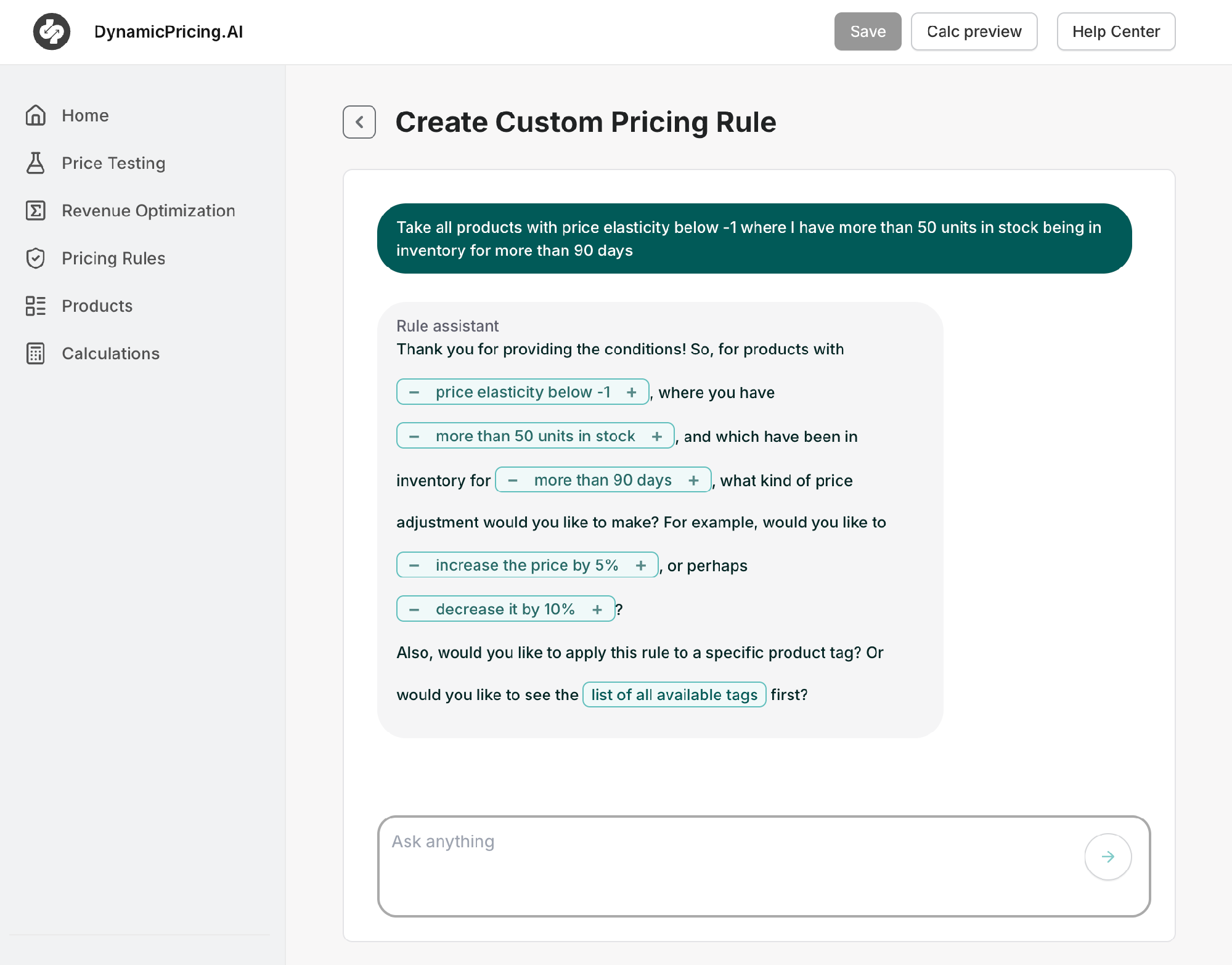
Platforms like dynamicpricing.ai/ revolutionize pricing. They bring sophisticated tools to Shopify merchants. This empowers businesses of all sizes. They can implement advanced custom pricing strategies. By simply typing in plain English, merchants can create pricing formulas from prompt and apply scheduled re-pricing.
Seamless Price Management and Automation
dynamicpricing.ai/ for Shopify offers powerful features. It can clearly show price differences. This highlights where your pricing stands. You can then apply specific pricing rules. This process is intuitive. Even a chat interface allows rule application. Imagine talking to your pricing engine! This simplifies complex adjustments. You can calculate prices regularly. Set a scheduled basis for updates. Or, perform bulk price editing. This updates many products at once. Such flexibility saves immense time. It ensures your prices are always optimized.
This platform allows tailored rule creation. You can incorporate various data types. Customer data provides personalization. Behavioral data tracks shopper actions. Historical data reveals past trends. This holistic view crafts truly effective pricing policies. Explore how different roles can benefit from these advanced pricing solutions.
Guardrails and Control: Your Safety Net
Implementing dynamic pricing can feel daunting. That's why guardrails are crucial. dynamicpricing.ai/ ensures full control. You can set minimum and maximum price limits. These limits protect your profit margins. They also prevent aggressive underpricing. Prices will never drop below your set floor. They will not exceed your ceiling without approval. This creates a safety net. Furthermore, users can revert any price action. This function gives you ultimate oversight. It provides a higher level of control. You can experiment with confidence. Any undesirable changes are easily undone. This makes adopting custom pricing less risky. It puts the power firmly in your hands.
Conclusion
Custom pricing rules and policies are no longer optional. They are vital for e-commerce success. They enable agility and responsiveness. Businesses can adapt to market shifts. They can optimize for profitability. By leveraging diverse data, from weather to competitor actions, you gain an edge. Tools like dynamicpricing.ai/ provide the necessary infrastructure. They offer control and flexibility. Embracing custom pricing ensures your store thrives. It meets customer expectations. It maintains a strong competitive position. Start optimizing your pricing today.
Frequently Asked Questions About Custom Pricing in E-commerce
1. What exactly are custom pricing rules?
These are automated guidelines. They adjust product prices dynamically. Rules consider various factors. This includes demand, inventory, conversion rates, costs, and competition.
2. How does custom pricing benefit my Shopify store?
It helps you stay competitive. You maximize profits on every sale. It also clears inventory faster. This is crucial for smaller operations.
3. Can custom pricing really improve customer loyalty?
Yes, personalized offers resonate. Customers feel valued. This fosters stronger relationships. They are more likely to return.
4. What kind of data is used for custom pricing?
It uses internal sales data. It also includes external factors. These are time, weather, commodity prices, competitor information. Behavioral data like clicks and page visits is also key. Behavioral data is treated as potential demand.
5. Is it difficult to implement custom pricing policies?
Modern platforms simplify it. Tools like dynamicpricing.ai/ integrate easily. They offer user-friendly interfaces. This makes implementation straightforward.