
pricing rules
Conversion Rate Pricing Rules
AI-powered rules to improve conversion and protect margin

What’s Not Working with Your Conversion-rate-Based Pricing Today
Real Pricing Challenges E-commerce Merchants Face
Are high-traffic products failing to convert into sales
Are you discounting without knowing whether price is actually the problem
Do strong-performing products convert well but leave margin on the table
Is it hard to connect price changes with conversion performance and profit impact?
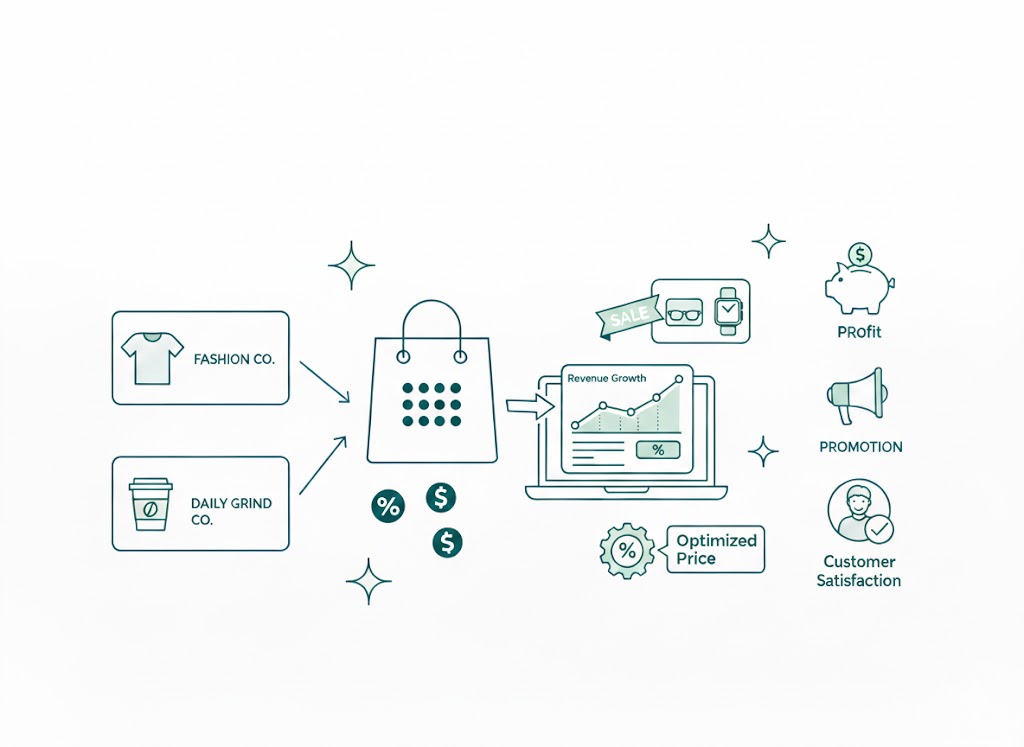
The benefits of AI-driven conversion-based pricing
How Conversion-Based Pricing Rules Drive Better Performance
Conversion performance changes constantly — influenced by traffic quality, customer intent, seasonality, and price sensitivity. Static pricing rules and manual discounts can’t respond precisely to these shifts.
AI-powered conversion rate pricing rules help you:
- Improve Conversion Where It Matters
Automatically adjust prices on products with high traffic but weak conversion — without applying across-the-board discounts.
- Protect Margin on Strong Performers
Avoid unnecessary discounts on products that already convert well and adjust pricing to reflect real demand strength. - Balance Revenue and Profit
Optimize prices based on real conversion signals while safeguarding margins and brand positioning.
How CoNversion-Rate Pricing rules work
Intelligent Rules That Respond to Conversion Performance in Real Time
AI-powered conversion rate pricing rules continuously analyze how effectively products turn traffic into purchases and adjust pricing accordingly.
Conversion-rate-based rules can react to:
- Conversion-rate performance over selected time windows
- Traffic levels and product visibility
- High-traffic products with low purchase efficiency
- Stable, high-converting products with margin upside
- Performance changes after price adjustments

Testimonials


Instead of blanket discounting, conversion rules focus pricing changes only where performance data justifies action.
Get in Touch with Us
Schedule a call with our team!
FAQs
Conversion-based pricing rules automatically adjust product prices based on how well products convert. If conversion rate drops below a defined threshold, prices can decrease to encourage purchases. If conversion remains strong, prices can increase to protect or improve margins.
The system analyzes real store performance data over selected time windows (e.g., last 7 or 14 days). Conversion performance is continuously analyzed, and pricing actions are triggered based on predefined rule logic and real store data.
Yes. You decide what “low” or “high” conversion means for your business, as well as the performance window (for example, last 7 days, 14 days, or custom periods). This ensures the rule reflects your store’s traffic volume and seasonality.
The system continues monitoring performance after every adjustment. As conversion stabilizes or strengthens, pricing can be refined again to reflect the new demand level — within your defined limits.
Every conversion-based rule operates within price floors, margin limits, and maximum adjustment percentages that you define. This ensures prices never drop below sustainable levels or increase beyond acceptable brand limits.
No. Conversion-based pricing rules operate at the product or segment level based on performance data. This prevents unnecessary across-the-board discounting and focuses only on products that need optimization.