
Pricing Opportunities
Detect Overpriced and Underpriced Products with Precision
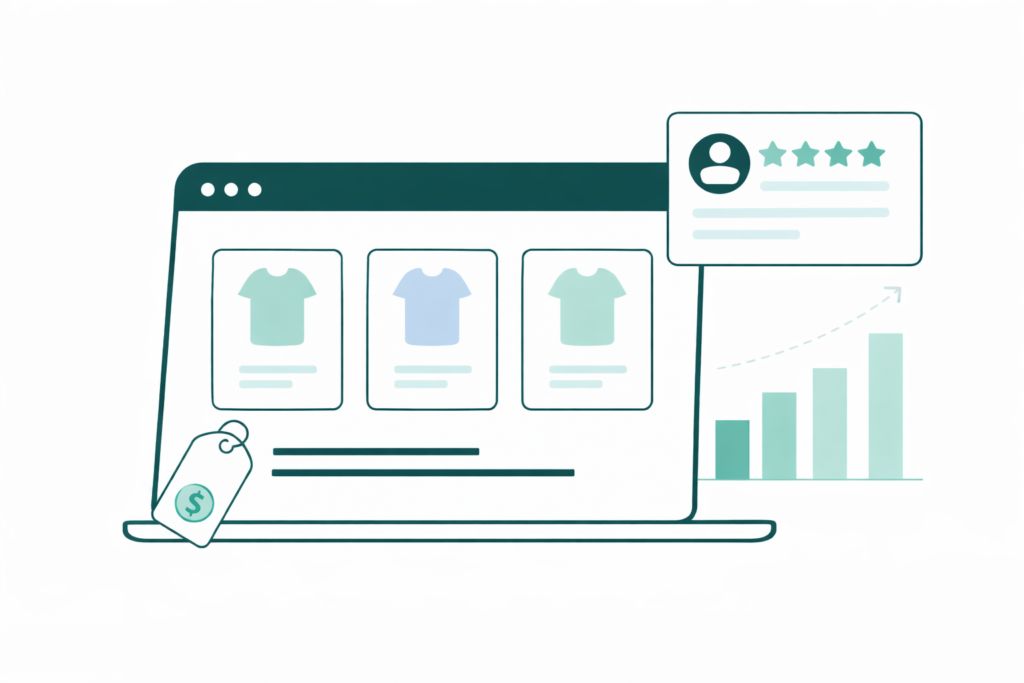
Are You Pricing Your Products Correctly?
Real challenges in pricing and positioning
- You don’t know if your products are overpriced or underpriced within their segment
- Pricing decisions are made without comparing truly similar products
- It’s difficult to detect pricing inconsistencies across competitors
- You may be losing margin or missing opportunities to be more competitive
- Manual analysis makes it hard to scale pricing decisions across categories
For example, Electric Drills (e.g. cordless, 18V battery, brushless motor, hammer function, professional range); or Wine Coolers (e.g. 30–40 bottle capacity, dual-zone cooling, built-in installation, energy class G) or Gaming Laptops (e.g. Brand X, RTX 4060 GPU, 16GB RAM, 1TB SSD, 15–16” display), where pricing only makes sense within clearly defined product specifications.

The Benefits of Pricing Insights
Turn benchmarking into pricing advantage
By analyzing pricing within well-defined product segments, you gain a clear and actionable view of where your products stand and where opportunities exist.
- Spot cheaper or more expensive product variants across competitors
- Identify pricing gaps within each segment to improve competitiveness
- Align your prices with product value and market expectations
- Avoid leaving margin on the table or pricing yourself out of the market
- Make more confident pricing decisions based on real, comparable products
With precise segmentation, brands and retailers can evaluate products like Bosch electric drills, wine coolers, or gaming laptops within the same specifications and clearly see whether they are overpriced, underpriced, or optimally positioned.
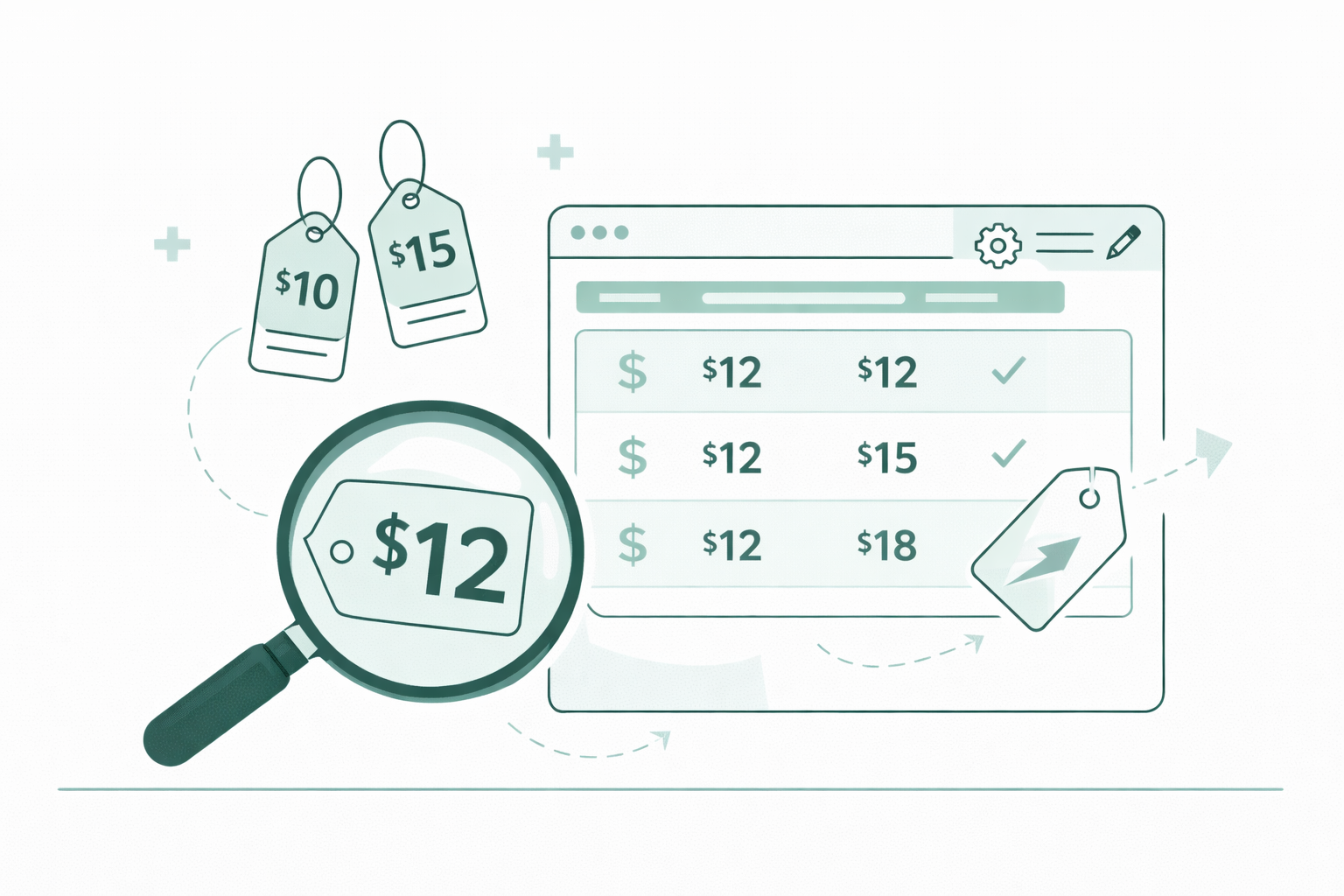
Analyze Pricing Across Comparable Products
Structured pricing insights across segments

Analyze pricing across clusters of comparable products to identify opportunities and optimize your pricing strategy.
- Filter products by overpricing or underpricing within each segment
- Compare pricing across competitors, brands, and price ranges
- Detect inconsistencies and pricing outliers in your market
- Focus on the most relevant product sets for accurate pricing analysis
- Export structured pricing data for reporting and strategy development
How it works
Pricing Insights Powered by Product Benchmarking
Our system analyzes pricing across dynamically defined product segments to identify opportunities and support better pricing decisions.
- Define segments based on detailed product specifications
- Compare prices across similar products from selected competitors
- Detect overpriced and underpriced products within each segment
- Continuously update pricing data as the market evolves
- Save and reuse segmentations to scale your pricing analysis
Testimonials


Optimize Your Pricing Strategy with Confidence
Stop guessing prices. Use market data to capture every opportunity.
- Increase margins by identifying underpriced products
- Improve competitiveness by adjusting overpriced items
- React faster to market changes and competitor pricing
- Build a more consistent and data-driven pricing strategy
Get in Touch with Us
Schedule a call with our team!
FAQ - Benchmarking Module
The primary purpose is to provide a comprehensive market view of product offerings, allowing users to analyze comparable, similar, and new products offered by competitors, and to facilitate competitive analysis by highlighting market positioning, identifying assortment gaps, and tracking pricing trends.
Users navigate to the top menu and select Benchmark.
Once a category is selected (e.g., Vacuum Cleaners), the system automatically populates specification filters that are relevant only to that specific product type (e.g., Power Supply for vacuums vs. Operating Pressure for pressure washers).
Users can utilize the Price From and Price To fields to isolate specific price bands (e.g., the $80–120 range) to analyze direct competition within specific value tiers.
Users can refine the dataset using Brand Selection (specific competitors/manufacturers), Product Specifications (attributes like "Dust Collection Type"), and Price Segmentation (Price From and Price To fields).
Clicking "Show Sites" expands the view to display all retailers holding a specific product, allowing users to view current pricing across all retailers for identical items.
Clicking on a specific product name opens the detailed view, which includes a Price History feature that displays a historical graph of price fluctuations for that product.
Users can identify seasonality, promotional periods, and competitor pricing strategies (drops or increases) to inform their own pricing and inventory decisions.
The system generates a standardized product name based on primary specifications for consistency, but the detailed view also lists the specific naming conventions used by each competitor on their respective websites.
Users select a product, click Find Similar Products, and then create a new filter based on specific attributes of the selected item (e.g., "Cordless" and "Bagless") to generate a list of products that share these technical specifications, regardless of brand.
Users use the checkboxes next to the product names in the main table to select items for comparison.
The comparison view displays product images, current pricing, previous pricing (indicated by strikethroughs), and technical specifications side-by-side. Items can also be removed instantly to refine the view.
The Segments feature allows users to save specific, configured filter settings (e.g., "Cordless, Bagless, under $300") for recurring use, eliminating the need to manually rebuild filters when tracking specific competitive sets.
The user can click Save to overwrite the current segment with the new criteria, or click Save As to create a new, separate segment based on the modifications.