
Pricing Monitoring
Track Market Prices and Feed Your Benchmarking Engine

Are You Missing Critical Price Changes?
Real challenges in price monitoring and execution
- You don’t have real-time visibility into how competitors’ price similar products
- Price changes and promotions go unnoticed, impacting your competitiveness
- Monitoring across multiple websites and partners is manual and time-consuming
- You lack structured data to connect pricing with product specifications
- Pricing decisions are disconnected from actual market dynamics
For example, monitoring Gaming Laptops without linking price changes to specifications (e.g. GPU, RAM, storage) makes it impossible to understand if a price drop reflects real competition or a different product configuration.
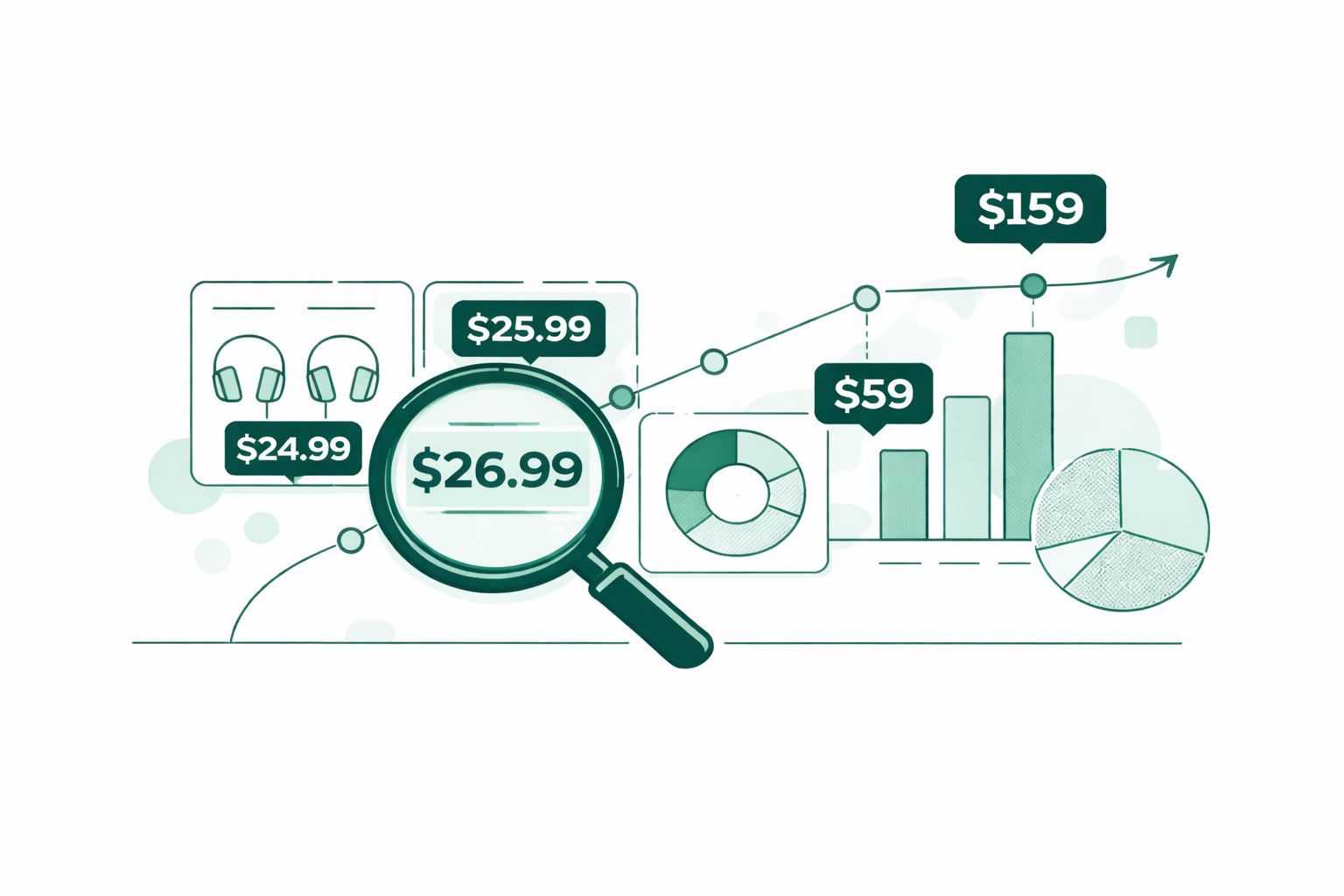
The Benefits of Real-Time Pricing Monitoring
From raw price data to actionable benchmarking insights
Real-time monitoring is the foundation of effective benchmarking. By continuously collecting and structuring competitor data, you gain full visibility and control over your pricing strategy.
- Monitor channel partners’ pricing and promotional activity
- Detect price changes instantly across competitors and marketplaces
- Prevent price wars and maintain consistent market positioning
- Ensure pricing compliance across channels and partners
- Feed accurate, up-to-date data into your benchmarking and pricing workflows
By connecting monitoring with benchmarking, brands and retailers can understand not only how prices change, but why – based on comparable products and market dynamics.

Monitor and Structure Market Data at Scale
From data collection to benchmarking-ready insights

Collect, enrich, and structure competitor data to power your benchmarking and pricing decisions.
- Monitor competitor websites to collect product and pricing data
- Enrich products with detailed specifications through structured data processes
- Transform raw data into comparable, benchmarking-ready product sets
- Connect pricing data with product attributes for accurate analysis
- Export structured data for reporting and further strategic use
How it works
From Monitoring to Benchmarking in One Workflow
Our system connects real-time monitoring with product benchmarking to deliver a complete, data-driven view of your market.
- Collect product and pricing data from competitor websites
- Enrich products with detailed specifications through data processing
- Structure products into comparable datasets ready for benchmarking
- Push enriched data into the benchmarking module for segmentation and analysis
- Continuously update data to reflect real-time market changes
Testimonials


Take Control of Your Pricing Execution
Move from reactive pricing to a controlled, data-driven strategy.
- React instantly to competitor price changes
- Strengthen relationships with channel partners through pricing consistency
- Improve pricing decisions with accurate, structured market data
- Build a scalable and connected pricing and benchmarking workflow
Get in Touch with Us
Schedule a call with our team!
FAQs
Dynamic pricing is a pricing strategy that involves adjusting prices in real-time based on various factors such as demand, supply, market conditions, customer behavior, and competition. It allows businesses to set prices that are optimized for maximum revenue and profitability.
Dynamic pricing offers several advantages, including:
- Maximizing revenue and profit potential
- Optimizing pricing based on market demand and competition
- Adjusting prices to match customer preferences and purchasing patterns
- Enhancing competitiveness and market positioning
- Improved inventory management and sales forecasting
While dynamic pricing can be beneficial, it also presents challenges, including:
- Setting the right pricing algorithms and models
- Monitoring and analyzing vast amounts of data in real-time
- Ensuring fairness and managing customer perception
- Dealing with potential backlash and negative consumer reactions
- Adapting to dynamic market conditions and changing customer behavior
Dynamic pricing is utilized in various industries, including:
- E-commerce and online retail
- Travel and hospitality (hotels, airlines, car rentals)
- Direct to consumer products
- Entertainment and event ticketing
- Utility and energy sectors
- Restaurants and food delivery services
Dynamic pricing has a significant impact on e-commerce. It helps businesses stay competitive by adjusting prices based on demand, competitor pricing, and customer behavior. It can increase revenue and conversion rates while also enabling businesses to manage inventory effectively.
Ethical concerns surrounding dynamic pricing include:
- Ensuring fairness and avoiding price discrimination
- Transparency in pricing strategies and algorithms
- Protecting customer trust and loyalty
- Mitigating the negative impact on vulnerable or price-sensitive customers
Consumer reactions to dynamic pricing vary. Some consumers appreciate personalized pricing and discounts, while others may perceive it as unfair or manipulative. Building trust through transparent pricing policies and effective communication is crucial in managing consumer reactions.
Yes, several tools and technologies are available to support dynamic pricing implementation. These tools offer pricing intelligence, competitor analysis, and real-time data insights. Examples include dynamic pricing software, revenue management systems, and AI-driven pricing algorithms.
The future of dynamic pricing involves advancements in technology, including AI and machine learning. Personalization and customization will play a more significant role, allowing businesses to tailor pricing strategies to individual customers. Integration with emerging technologies and the use of real-time data will continue to shape the future of dynamic pricing.